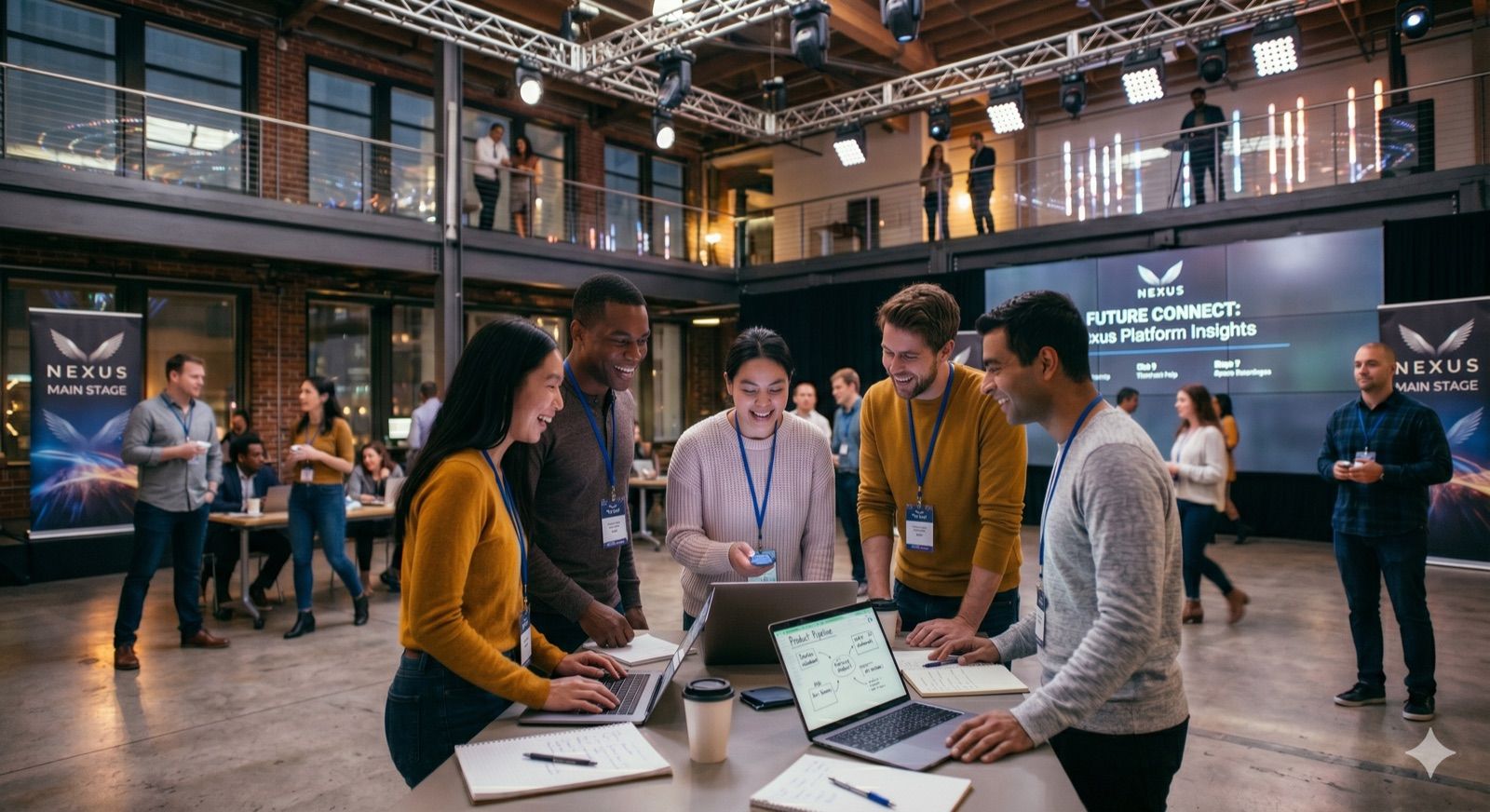
There's no medium more honest and emotionally engaging than a live experience. Every other channel gives you editing rights. You can reshoot the film, rewrite the copy, A/B test the subject line, pull the post, issue a correction. A live event doesn't work like that. When the doors open and the people stream in, whatever you have built is what you are. The gap between your brand promise and your brand reality becomes visible in real time, to real people, who will remember it and tell other people about it. The event is not a representation of the brand. Because for the duration, it is the brand.
I worked on a Hilton activation in Shenzhen in 2024, this fact was brought home with the strength of a clenched fist. The brief was clear: create something that would live long in the memories of those who attended: culturally relevant, brand-centric and with production so flawless that even the push notifications on the app would be flawless to the minute. I added that last one as it was one wrinkle that did come along, but only once and it wasn't a show-stopper. We had to craft and execute three flawless days with more than a thousand of Hilton's senior leaders from APAC and their global management team. There wasn't any wiggle room for error.
The planning process was revealing across 9 months. Every decision about the physical experience, the arrival sequence, the pace of the evening, the hierarchy of moments, the sensory detail, the points of unexpected delight — all of it was interconnected and all of it turned out to be a brand decision in disguise.
Where the friction was, told you what the brand prioritised. Where the generosity was, told you what the brand actually valued versus what it said it valued. What we chose to cut, because it was diluting the central idea even though someone had spent money on it, those were not event production choices. Rather, they were the most direct expression of brand values I have encountered, because hiding behind the edit wasn’t an option.
The weak ideas appear quickly in experiential activations, and they do so publicly. The concepts that only worked on a slide, that had no physical logic once you tried to build them. The activations solving the wrong problem, designed to impress the client rather than spark something in the guest. The moments that felt meaningful in the debrief, yet felt awkward in the room. You find all of this when gazed upon by the attendees — and that's a very expensive place to discover it.
The strongest events I have been involved in were also the ones with the tightest briefs, which held strong under the most pressure. The clarity of ideas is the only protection you have when the clock is running and the rooms are full.
There’s also something experiential does that no other medium quite replicates: it creates shared memory. A film is watched individually, even in a cinema. But an event is experienced collectively, and the shared nature of that experience changes its emotional weight. When something delights a room simultaneously, the delight compounds. When something falls flat in a room, that also compounds but with a deafening crash of silence.
The collective experience is the product. This is why brands that do experiential activations or events well invest so heavily in what happens in the first few minutes. The emotional contract with the audience is shared, reviewed and signed almost immediately. And it's very damned hard to renegotiate.
What Shenzhen confirmed for me is that experiential activations or events aren't marketing channels you add to the mix when you have some budget left over. They are the clearest brief you'll ever write — and the most unforgiving media you’ll ever work in. The brands that treat it as decoration, as a party with a logo on it, waste the opportunity entirely. The ones that treat it as the most comprehensive possible expression of what they believe, with every detail in service of that, build something that lives in people's memories long after the room is cleared.
If you want to understand what your brand actually is, put it in a room with people who aren’t there out of choice, give them a couple of hours, and then watch. What happens next isn't a metric. It's actually the unfiltered truth.